Marcos Silber ’s keynote accompanies the international conference "Not the End, Not the Beginning: Reconstructing Jewish Life in Poland and Central Europe after the Second World War".
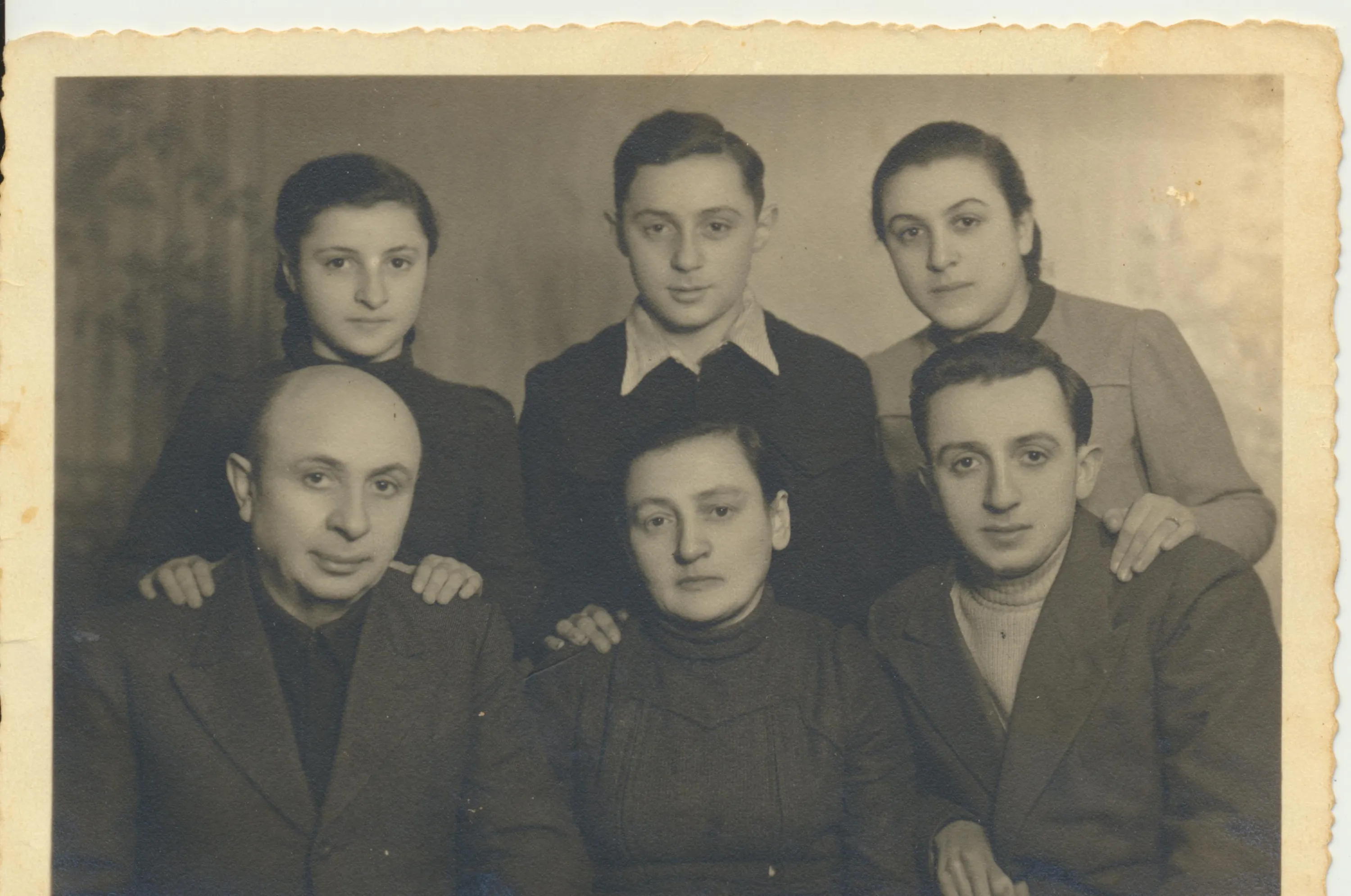
- June 15, 2025 (Sunday), 6PM
- Lecture in English with Polish translation
- Free admission
Jewish migrations between Poland and Israel during 1945–1957 may be seen as a complex transnational process shaped by both structural forces and individual agency. Challenging traditional historiography of the nation-state and moving beyond "push-pull" theories, the lecture will focus on two key phenomena: strategic identity presentation and transnational networks. Depending on context of migration processes, migrants emphasized different aspects of their identities – highlighting ethnic, professional or ideological connections.
These tactical self-presentations reveal migration not as a one-time movement but as a process of ongoing negotiation of belonging. Transnational family, cultural and professional networks facilitated migration and maintained cross-border connections across and despite the Iron Curtain. This perspective offers a more nuanced understanding of Jewish life after the Holocaust—one that recognizes vitality, resilience and agency alongside tremendous loss.
Marcos Silber is a professor at the University of Haifa. He is a historian specializing in modern Jewish history, with a particular focus on Eastern Europe, migration studies, popular culture, and nation-building processes. His research examines the intersection of state policies and individual experiences.
He has edited with Szymon Rudnicki two volumes in Polish and Hebrew of "Documents on Polish-Israeli Diplomatic Relations" (2009), published several articles on postwar Israeli-Polish relations and mutual migrations ("Journal of Israeli History" 2008, 2010, "East European Jewish Affairs" 2017, and in edited volumes 2019, 2020, 2022) on the transference of cultural practices and ideas between "Polish" and "Jewish" cultures and the Polish lands and Israel ("Tsion" 2015, "Acta Poloniae Historica" 2021, "Michael" 2024, "Postscriptum Polonistyczne" 2025, and elsewhere). He combines archival research with theoretical approaches from migration studies, cultural studies and social history to illuminate bottom-up perspectives on historical processes.
Migration, Bordering and Belonging Beyond Borders – Jewish Movement Between Poland and Israel, 1945–1957
15.06.2025 - 15.06.2025

