Workshops of Early- and Intermediate-Career Holocaust Scholars are a grassroots idea, born out of the need to create a platform for discussion, exchange of research experiences, ideas and sharing of progress in academic work, as well as the desire to integrate people from different research centers and backgrounds.

Third Workshop of Early- and Intermediate-Career Holocaust Scholars
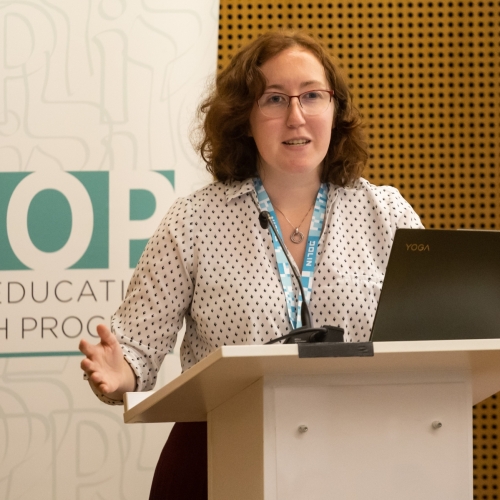
The third edition of the Workshop of Early- and Intermediate-Career Holocaust Scholars was held on June 9–10, 2025. The event was organized in partnership with the United States Holocaust Memorial Museum (USHMM), POLIN Museum of the History of Polish Jews, and the Zapomniane Foundation.
The first day featured four thematic sessions that addressed: transformations within the welfare system of the Warsaw Ghetto; a typology of Nazi collaborators in the Warsaw Ghetto, including their motivations and networks of affiliation; the activities of Gestapo agents in occupied Kraków and their Jewish victims and a guided tour of the exhibition "1945: Not the End, Not the Beginning" at POLIN Museum.
The second day opened with a presentation of a biographical project on Mordechai Anielewicz, conceived as a micro-historical study that explores the complexities of identity, ideology, and memory. This was followed by a workshop dedicated to trauma in visual testimonies, which included analysis of non-verbal indicators of trauma in interviews and ethical considerations in working with survivor narratives.
The workshop concluded with a plenary session that emphasized the high scholarly quality of the contributions. It successfully fulfilled its core objectives: providing a platform for scholarly exchange and reflection, strengthening research collaboration, and fostering integration among researchers, scholars, and activists engaged in Holocaust studies.
Second Workshop of Early- and Intermediate-Career Holocaust Scholars
On February 20–21, 2025, POLIN Museum of the History of Polish Jews hosted the Second Workshop of Early- and Intermediate-Career Holocaust Scholars.
The central theme of the workshop was memory, commemoration, and memory activism. The program consisted of seven sessions and a presentation by the “Zapomniane” Foundation, which focused on methods of engaging with local communities and dealing with uncommemorated sites. Participants explored topics such as the memory of the Jewish Council of Elders and the Jewish Order Service in the Tomaszów Mazowiecki ghetto, the role of Jewish history in Zakopane in shaping local identity, and the function of maps in Yizkor books as forms of Holocaust testimony.
The workshop also addressed the long-term consequences of the looting of Jewish property, examining mechanisms of memory and denial in the context of the Holocaust’s economic legacy. A session devoted to personal biography featured the case of Roman Zimand—the son of a Jewish factory owner—as an example of individual history analyzed within a broader social framework. The program included a research walk through Muranów, offering a practical engagement with a space where Holocaust memory visibly intersects with contemporary urban planning.
The workshop facilitated the exchange of experiences, the building of scholarly networks, and a collective search for language to describe the complex processes of memory. The topics addressed extended beyond historical inquiry, encompassing contemporary strategies for engaging with the past in both public and private spheres.
First Workshop of Early- and Intermediate-Career Holocaust Scholars
On December 5-6, 2024, POLIN Museum of the History of Polish Jews hosted the First Workshop of Early- and Intermediate-Career Holocaust Scholars.
The first workshop brought together nearly 60 Polish researchers at a similar stage of their careers. As part of the emerging network, presentations of research and academic projects – regardless of their scope (from an article or source study to books or joint projects), methodological workshops, and discussions on how to conduct research are planned.
The workshops were organized within the framework of the POLIN Museum Global Education Outreach Program.
The workshops were created in cooperation with:
- United States Holocaust Memorial Museum (USHMM)
- the Zapomniane Foundation
- and POLIN Museum.
The workshops were made possible thanks to the support of the Zapomniane Foundation.

The events are part of the "MultiMemo" project, implemented by the Zapomniane Foundation together with partners from Poland and other European countries, thanks to the support of the European Union under the CERV: Citizens, Rights and Values program.