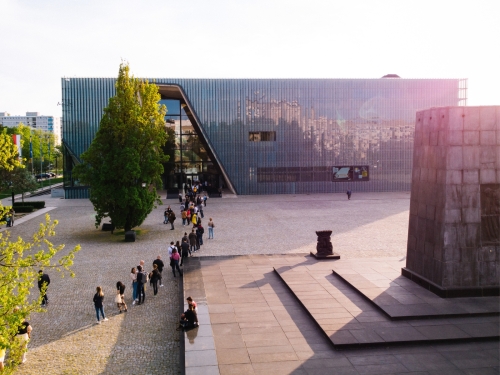
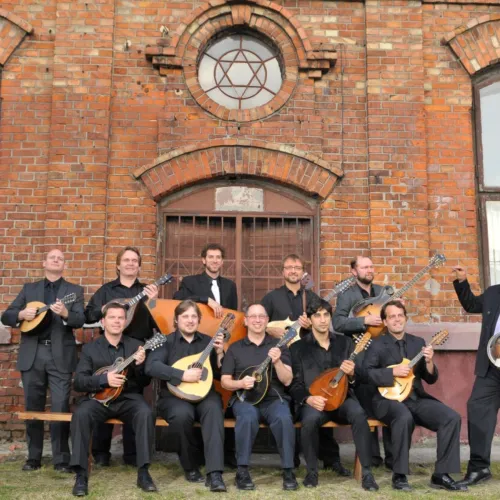
Together with Toronto Holocaust Museum we are proud to present a lecture by Dr. Natalia Romik at the Leah Posluns Theatre in Toronto.
Copyrights
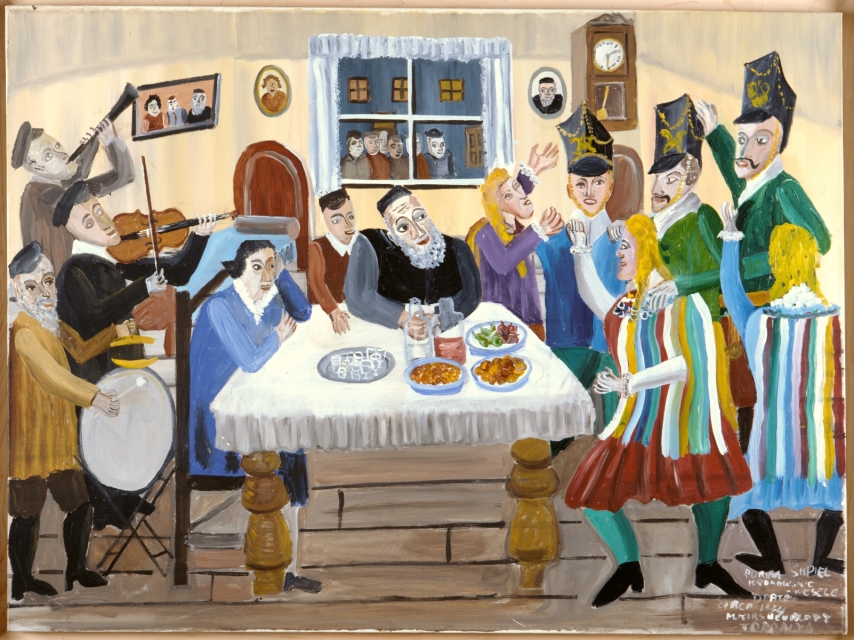
MAJER KIRSZENBLAT, PRZEDSTAWIENIE PURIMOWE "KRAKOWSKIE WESELE", OK. 1994 R., AKRYL NA PŁÓTNIE, ZBIORY MUZEUM POLIN, Kolekcja Sztuki Mayera July imienia Rodziny Taube, dar rodziny Kirshenblatt

Copyrights
Natalia Romik, fot. J. Kołodziejski
- March 27, 7:30 pm
- Tickets and more information →
Millions of Jews in Eastern Europe once lived in towns, shtetlekh, where they created a vibrant Jewish way of life. Today, these shtetlekh are "post-Jewish" towns. Not a single Jew remains. This illustrated lecture juxtaposes the paintings of Toronto artist Mayer Kirshenblatt, who recalls his vivid childhood in Poland before the Holocaust, with the "post-Jewish" town that his birthplace, Opatów (Apt in Yiddish), has become. Join the Toronto Holocaust Museum and POLIN Museum of the History of Polish Jews for a chance to unpack this unique history through the lens of art and architecture.
Dr. Natalia Romik is a public historian, architect, and artist. Her work focuses on Jewish memory and Holocaust commemoration in Eastern Europe, particularly Poland and Ukraine. She has collaborated as a curator and exhibition designer at POLIN Museum of the History of Polish Jews. She is a winner of the 2022 Dan David Prize, the largest prize in the field of history in the world.
Co-organizer