Copyrights
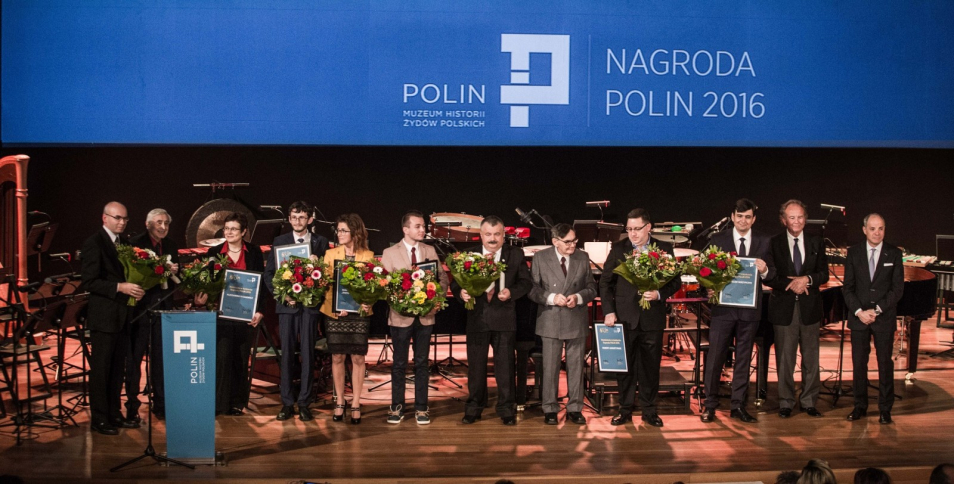
Laureaci i nominowani do Nagrody POLIN 2016 / Winners and nominees of the 2016 POLIN Award, fot. M. Starowieyska / Muzeum Historii Żydów Polskich POLIN
We are thrilled to inform that we are now accepting entries to the 2nd edition of the POLIN Award. The winner, selected by the jury from among individuals, organizations or nstitutions that actively contribute to the preservation of the memory of the history of Polish Jews, will receive a statuette by Barbara Falender as well as a financial award.
From 22 August 2016, adult individuals, institutions and organizations may submit candidates to the POLIN Award by filling out an application form available at www.polin.pl. Deadline for submissions is 12 September.
"We have established the Award to honour people and institutions that in various ways serve the same purposes as POLIN Museum. Local initiatives often have an invaluable influence on restoring memory about the history of Polish Jews and building mutual understanding and respect between Poles and Jews. They deserve to be popularized and supported, and their initiators have earned our gratitude," said Prof. Dariusz Stola, Director of POLIN Museum.
The POLIN Award winner will receive a statuette designed and produced by Barbara Falender and a 10,000 zlotys financial award, founded by Tomek Ulatowski and Ygal Ozechov. The award gala will be held on 20 October and will launch Made in POLIN, a three-day festival organized each year on the anniversary of the grand opening of the POLIN Museum's core exhibition.
The POLIN Award was first granted in 2015. It went to Tomasz Pietrasiewicz, founder of the the Grodzka Gate centre, who since 1998 had carried out a number of educational and artistic projects devoted to the heritage of Lublin Jews. In its programme, the Centre refers to the symbolic and historic significance of its location, the Grodzka Gate, also known as the Jewish Gate, which used to be a transition point between the Christian and Jewish quarters of the city, a meeting place of various cultures, traditions and religions.