"Askenazy was one of the most distinguished Polish historians; as a scholar of the past, he belongs to the group of leading figures in Polish historiography," Adam Zahorski, a renowned Warsaw historian, wrote nearly thirty years ago.
Copyrights
fot. domena publiczna
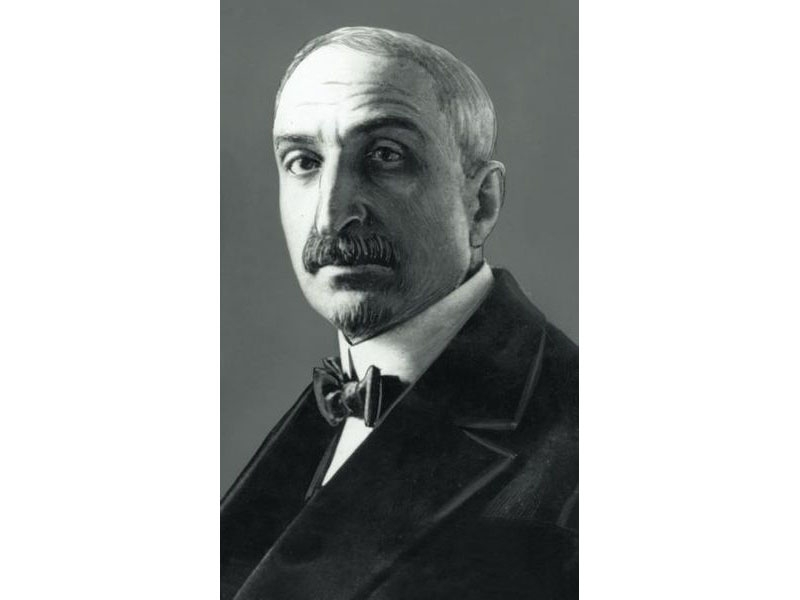
Szymon Ashkenazy, born on 28 December 1865 in an acculturated Jewish family, shared the fate of a diverse group of Polish-Jewish intelligentsia whose intellectual and spiritual development occurred at a difficult period of the turn of the twentieth century.
The future historian and political activist grew up in the milieu which propagated patriotism and supported Polish independence. In all likelihood, the ambience of his family home shaped Askenazy’s attitude and political views, as well as his interpretation of Polish history. He was steadfast and brave—as a politician and a historian, he would often go against the fixed thought patterns of his contemporaries.
Askenazy’s academic career focused on the studies of political history at the turn of the nineteenth century. He was a pioneer in the field of studies on the Napoleonic era and the national insurgencies. A good number of his works devoted to these issues are still considered relevant today. The scholar’s complex personality and—above all else—his Jewish origin which he eagerly confirmed (despite being a proponent of the assimilationist trend) were a source of many problems in the course of his career both at the Lvov University, which he joined having defended his doctorate in Germany, and at the University of Warsaw. Due to conflicts and intrigues, Askenazy did not succeed in getting an academic post in the capital of newly independent Polish state (one of his opponents was Marceli Handelsman, the founder of Warsaw circle of historians).
The reluctance towards a historian who is a Jew heading the department of Polish history resulted in antisemitic attacks on Askenazy. Despite all these predicaments, the eminent historian managed to train a group of highly qualified and talented disciples within the Lvov milieu prior to World War One. The difficult interwar period marked his gradual withdrawal from the academia. The crisis of values and the clash between the actual situation in the country and the ideas that had always guided him, resulted in Askenazy’s gradual abandonment of an active scholarly career in newly-reborn Poland.
As a politician, Askenazy revealed a number of talents and skills, especially during and after the First World War. A master of intellect with broad horizons and political knowledge, he excelled in the world's great political salons. While in Switzerland, where he spent his wartime migration, he cooperated with the General Committee to Aid the Victims of Wars in Poland; upon his return to the country, he joined the Regency Council. From 1920, he was (the first) delegate from independent Poland to the League of Nations. Conflicted with National Democracy, Askenazy left public service in 1923, after Roman Dmowski had become Foreign Minister of the Second Republic of Poland.
Szymon Askenazy died on 22 June 1935, and his funeral at the Jewish cemetery on Okopowa Street in Warsaw was an opportunity for eminent historians such as Wacław Tokarz to recall Askenazy's enormous contribution to Polish historiography. Among a number of important works that he produced, his beautifully written biographies of Józef Poniatowski and of Walerian Łukasiński remain an unrivalled example of books on the political history of Poland in the first decades of the nineteenth century.